
2026-09-07 · Sam Torres
How Santa Ana Winds Carry Dust Into Beverly Hills Air Ducts
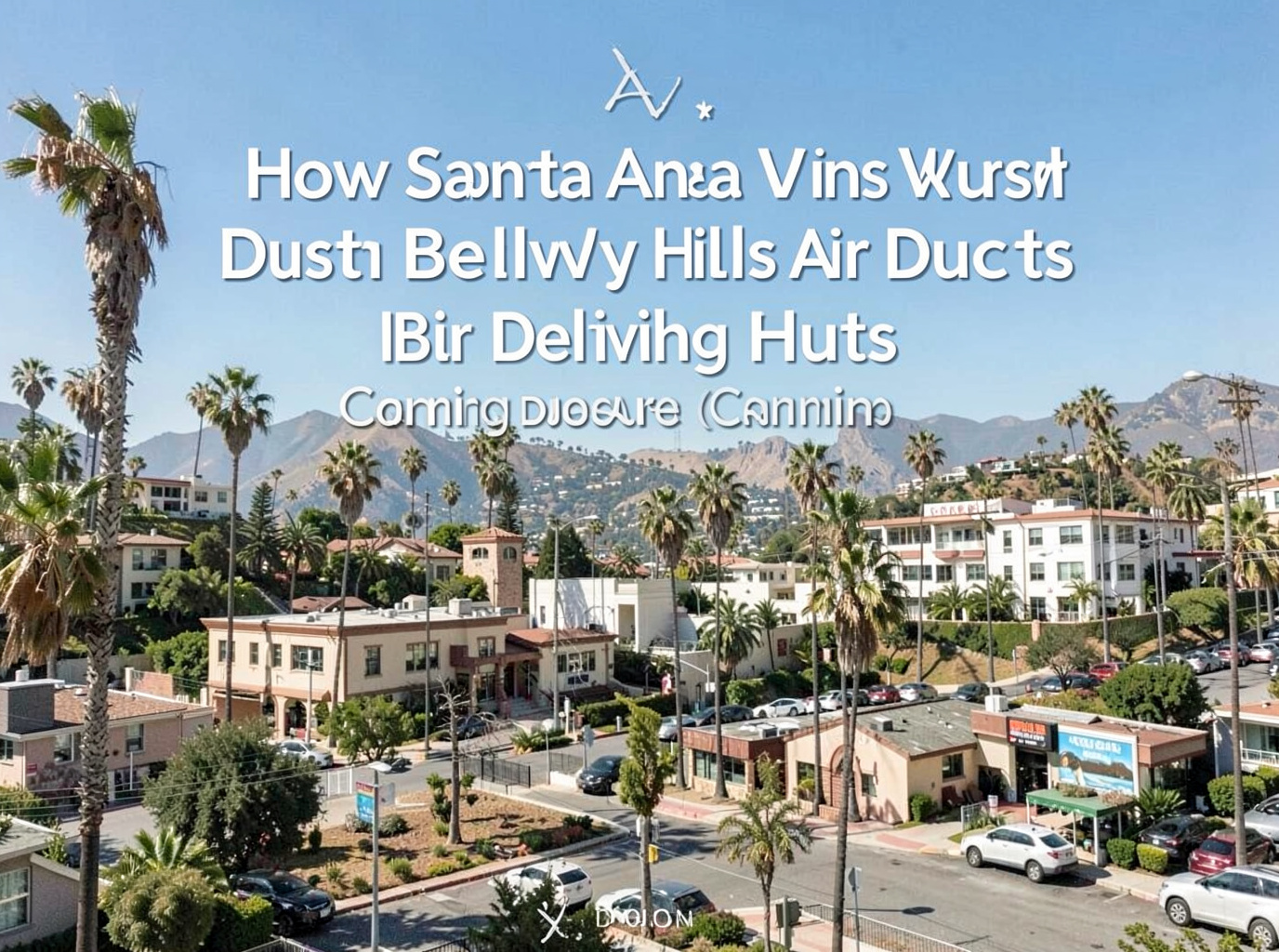
Santa Ana winds push fine desert dust into Beverly Hills air ducts by forcing hot dry air through roof vents, unsealed joints and exterior wall penetrations in homes throughout the Beverly Hills Flats, Trousdale Estates and Beverly Hills Post Office neighborhoods.
How Santa Ana Winds Form and Travel to Beverly Hills
Santa Ana winds originate in the high deserts east of Los Angeles County and descend through mountain passes with speeds often exceeding 40 mph. These winds pick up loose soil and pollen before reaching the mild Mediterranean climate zone that covers Beverly Hills. Once the air mass drops into the city it loses moisture rapidly, leaving behind a fine silt that settles on roofs and enters any opening in the building envelope. Homes built before 1960 in the Golden Triangle commonly have attic ducts with older joints that allow this dust to bypass filters. The same pattern repeats when winds blow toward nearby West Hollywood and Culver City, where similar housing stock experiences comparable infiltration.
Dust Entry Points in Local Housing Stock
Beverly Hills residences from the 1920s through 1950s feature louvered attic vents and unsealed chaseways that act as direct pathways during high-wind events. In Trousdale Estates, hillside homes sit at angles that expose south-facing vents to the prevailing wind direction. Dust particles smaller than 10 microns travel through these openings and land on duct interiors before the HVAC system even runs. Residents near Beverly Gardens Park and Greystone Mansion report visible dust layers on supply registers within 48 hours of a strong Santa Ana event. The same winds that affect Beverly Hills also reach Los Angeles and Culver City, carrying identical dust loads into comparable pre-war and mid-century homes.
Seasonal Timing and Accumulation Patterns
Santa Ana conditions peak between October and February, aligning with the period when Beverly Hills homes switch from cooling to heating. Each multi-day wind event can deposit measurable dust inside return ducts before homeowners notice reduced airflow. Over three or four events in one season, the buildup restricts airflow and forces the system to work harder. Properties along Rodeo Drive and near Beverly Hills City Hall experience the same seasonal loading because the wind path crosses the entire central business district. The mild nights typical of the region keep HVAC systems cycling frequently, pulling additional dust deeper into the duct network.
Practical Steps for Beverly Hills Homeowners
Inspect attic access panels and exterior vent covers before the wind season begins. Seal visible gaps with mastic or metal tape rated for HVAC use. Schedule a full residential air duct cleaning after the first strong Santa Ana period to remove accumulated silt before it circulates further. Homeowners in the Beverly Hills Flats often combine this service with inspecting air ducts in pre-war Beverly Hills houses to identify older joints that need attention. Checking filters every 30 days during wind events prevents early clogging and maintains system efficiency.
Long-Term Effects on Indoor Air Quality
Repeated dust loading from Santa Ana winds increases the concentration of fine particles that remain suspended after the system restarts. In homes with ducts running through unconditioned attics, the temperature swings common in the Mediterranean climate accelerate particle adhesion to duct walls. Over multiple seasons this creates a recurring maintenance need that differs from homes in less windy parts of Los Angeles County. Addressing the entry points and cleaning the ducts reduces the volume of dust that reaches living spaces in neighborhoods such as the Golden Triangle and Beverly Hills Post Office.